The music
The Four Seasons, explained
What Vivaldi's four violin concertos depict, how the sonnets work and why a work from the 1720s still fills halls and churches today.
Book the Vivaldi concert ↗Quick answer
Vivaldi wrote four violin concertos, one for each season, and printed them in 1725. A sonnet goes with each, so the music pictures birdsong, a storm, a hunt and a walk on ice. Wikipedia puts the set at roughly 40 to 43 minutes. Follow the story in each concerto and save your applause for the end of each one.
What it is
On Wikipedia's account, The Four Seasons consists of four violin concerti, each a musical portrait of one season. Its dating is loose, from about 1718 to 1723, a stretch that overlaps Vivaldi's post as chapel master at the court of Mantua. Eight more concertos joined them in a printed collection, Il cimento dell'armonia e dell'inventione, issued in Amsterdam in 1725. It is the best known of his works, and it anchors the Vivaldi evenings in this church.
The man
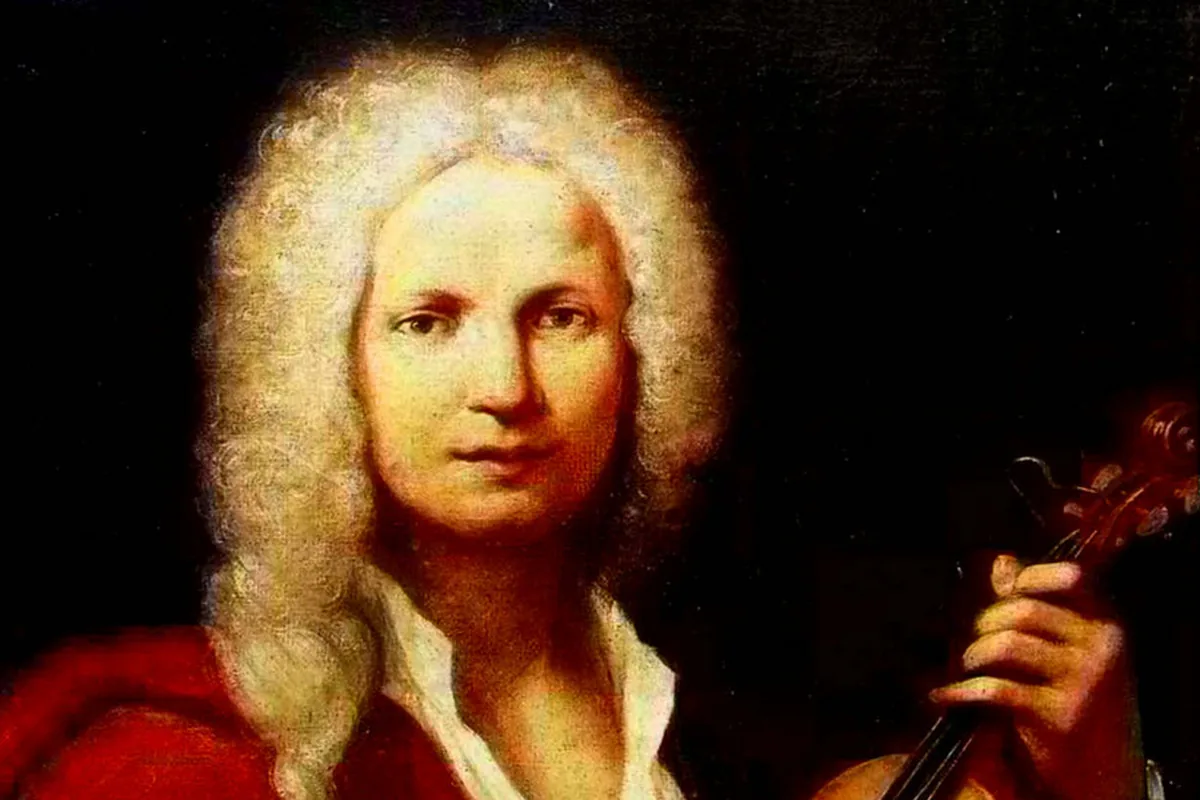
Born in Venice in 1678, Vivaldi studied for the priesthood and was nicknamed the Red Priest for his red hair. In 1703 he began teaching violin at a Venetian charity for abandoned children, the Ospedale della Pietà, whose best-gifted girls played in its celebrated orchestra and sang in its choir. Wikipedia says he wrote most of his major works while working there, that he left more than fifty operas, and that his name sank from view for nearly two hundred years before the revival of the early twentieth century.
The sonnets
It was rare in the 1720s to print a concerto beside a poem, yet these came with sonnets spelling out what each season should call to mind. Wikipedia says the author is unknown. One argument for Vivaldi himself is that every sonnet falls into three sections, one per movement. The score also carries his own cues in words, among them the barking dog, languor from the heat and drunkards asleep, and these cues are the reason the set is filed under programme music.
Spring
The first sonnet opens with birdsong and with streams that murmur as the breeze touches them. Storms roll in as heralds of the season, then die away, and the birds start up once more. For the slow movement a goat-herd dozes in a meadow of flowers, his dog at his side, and Wikipedia says the violas bark for the dog. The finale gives the stage to nymphs and shepherds, who dance to country bagpipes.
Summer
Summer begins in punishing heat, and the first movement carries the note languor caused by the heat. A cuckoo, a turtledove and a finch are heard, then a north wind pushes the soft breezes aside and a shepherd dreads the storm ahead. Lightning and buzzing flies keep him awake in the slow movement, and the closing presto is the storm itself, thunder and hail flattening the wheat.
Autumn
Autumn begins with a peasant celebrating a rich harvest with songs and dances, and with wine that sends many of the revellers to sleep. Vivaldi's note for the slow movement is that the drunkards have fallen asleep. The finale sets out at dawn with hunters, horns, dogs and guns. The hunted animal flees, is followed, grows tired of the noise and the chase and is wounded and dies, told from both the hunters' and the prey's side.
Winter
Winter starts out in the cold, with biting wind, stamping feet and teeth that will not stop chattering. The slow movement retreats to a fireside where the days pass in contentment while rain falls beyond the door. The finale follows people picking their way over ice, who slip, tumble and press on before it cracks. The sonnet closes on the thought that winter, even with every wind at war, has its own delights.
Fame and recordings
Wikipedia cites just two recordings in 1952 and roughly 1,000 recorded versions by 2011. Nigel Kennedy's 1989 recording sold over three million copies worldwide, and the Classic FM Hall of Fame placed the work at number 67. Its tunes turn up in films, ballets and pop songs, which is why many first-time listeners find the Four Seasons already familiar. A live performance in a church puts the same music in a real room, with the players a few rows away.
How to listen on the night
Read the sonnet for each season before you go, or glance at the section on this site's home page. Listen for the dog, the storm, the hunt and the ice, then let the music carry the rest. Wikipedia says applause between movements is discouraged and kept for the end of the whole work, so hold it until a concerto is over. That small courtesy keeps the story unbroken for everyone around you.
Frequently asked questions
When was The Four Seasons written?
Around 1718 to 1723, according to Wikipedia, and published in Amsterdam in 1725.
How long do all four concertos take?
About 40 to 43 minutes, says Wikipedia.
Who wrote the sonnets?
It is not known. Vivaldi may have, since each sonnet splits into three parts that match the movements.
Should I clap between movements?
No. Applause between movements is discouraged. Wait until the whole concerto ends.
Sources